NueX LIS — the AI-native lab information system for pathology.
Accessioning, grossing, staining, screening, reporting, dispatch — one record, one audit trail, and AI at the three steps that consume the most time.
Registration
Patient, referrer, test panel, barcode issued at the counter.
Accessioning
Specimen received, condition logged, rejection rules applied.
Processing
Grossing, blocks, sections and stains tracked per slide.
Analysis
Analyser results pulled in automatically; screening notes attached.
Reporting
AI drafts the synoptic report; pathologist edits and signs.
Dispatch
Signed PDF to portal, WhatsApp and referrer in one action.
Three interventions, each with a human signature at the end.
Cases route themselves
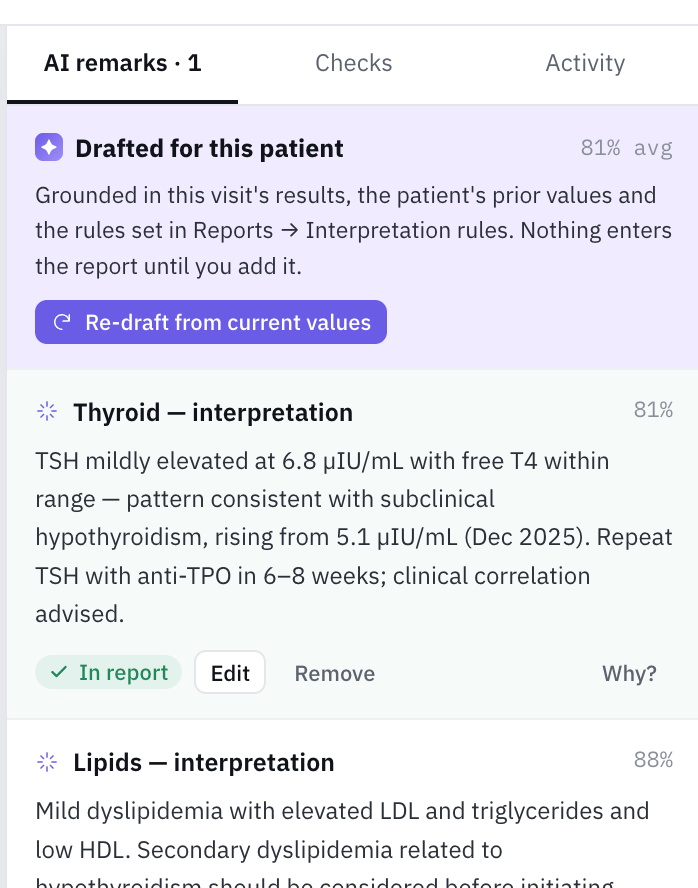
Priority, specimen type, department load and pathologist sub-specialty decide the queue. Stalled cases surface before they breach turnaround.
What it saves: the morning triage meeting, and the case nobody noticed.
Drafts, not blank pages
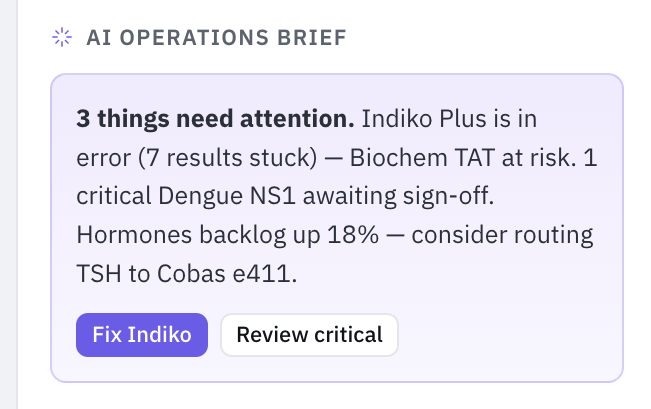
Structured templates pre-filled from analyser output and comparable prior cases, with flags on every out-of-range value. Every generated line is traceable to the field it came from.
What it saves: the retyping, not the judgement.
Two minutes at the front desk
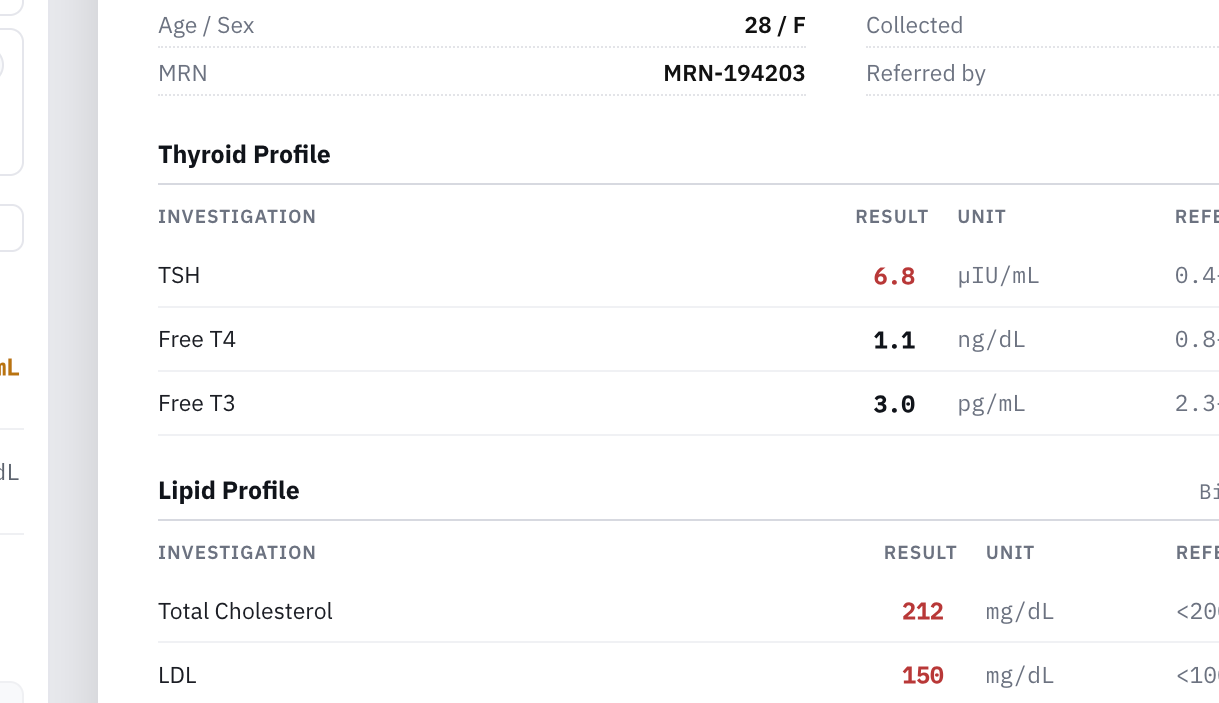
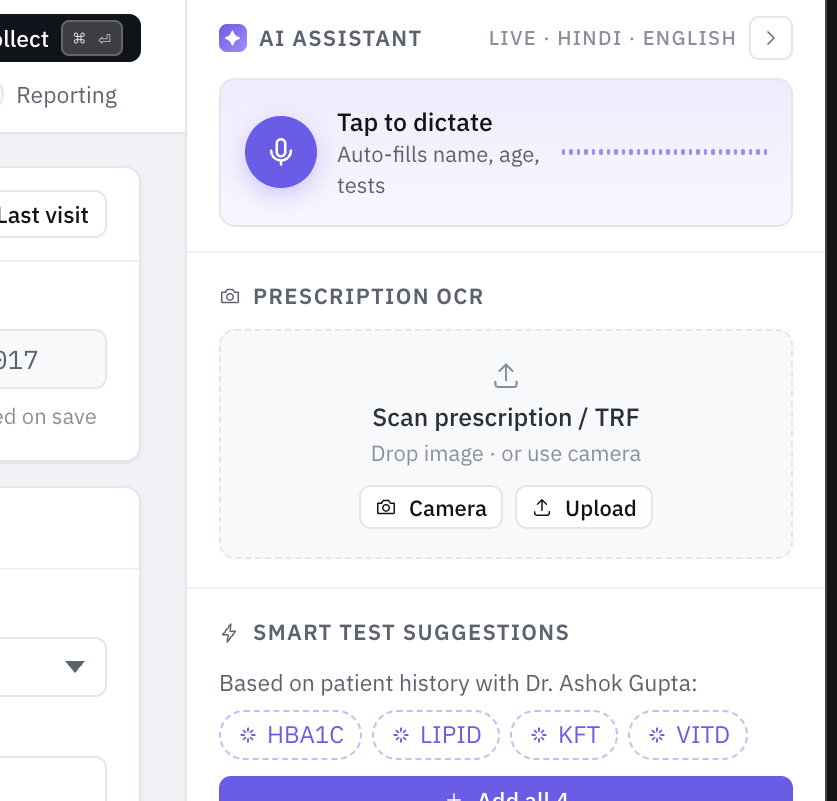
Dictation in Hindi or English fills name, age and tests. Prescriptions are read by OCR, prior visits matched, and the panel the referring doctor usually orders is one tap away.
What it saves: the queue at 9am, and the duplicate MRN.
Licensed per module. Most labs start with accessioning, reporting and dispatch, then add departments.
Your report layouts and your commercials are settings, not change requests.
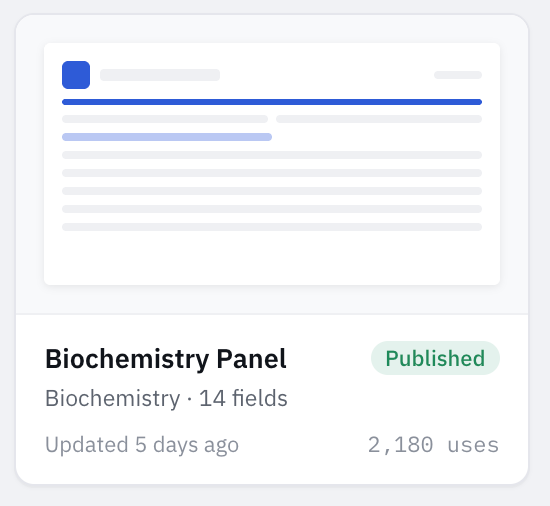
Every department gets its own layout — header, result table, interpretation slots — versioned, with draft and published states. Describe a new one and the AI builds the first draft for you to refine.

Referring-doctor commissions and patient rate cards held per doctor, per test, with TDS handled and payout statements generated — instead of a spreadsheet reconciled at month end.
Patient data stays where your compliance team can see it.
Deployment choice
Cloud, private cloud or on-premise in your own server room — the same build.
Audit trail
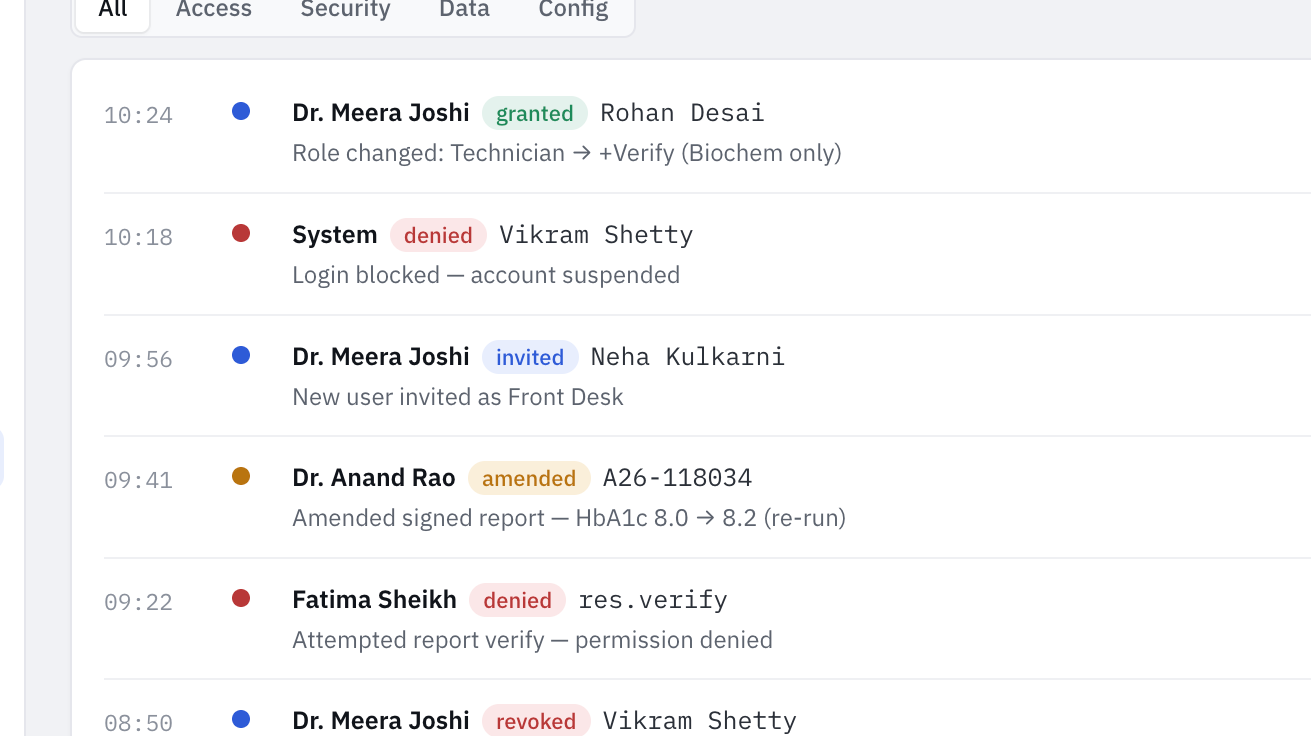
Every edit, view and signature stamped with user, time and reason.
Role-based access
Counter, technician, pathologist, admin and auditor scopes, separately configurable.
AI boundaries
No case data used to train external models. Generated text always requires a human signature.
What pathologists ask about the LIS.
Clinical, technical and deployment questions from labs currently evaluating NueX LIS.
Can NueX LIS run on our existing on-premise servers?
Yes. The same build deploys to cloud, private cloud or an on-premise server in your own room. Labs with data-residency constraints usually start on-premise and keep the patient report portal in the cloud.
Does the AI ever release a pathology report on its own?
No. The AI reporting assistant drafts, pre-fills and flags; a pathologist edits and signs every case. Nothing leaves the lab without a human signature, and every generated line is traceable to the source field it came from.
Is our patient case data used to train AI models?
Never for external models. Your data stays inside your deployment, and the audit trail records every view, edit and export with user, timestamp and reason for your quality file.
How long does LIS migration from our current system take?
A pilot department is typically live in weeks, running parallel to your existing process. Lab-wide cutover follows once results match, with historic case data imported on an agreed cut-off date.
Which laboratory disciplines does NueX LIS cover?
Histopathology, cytology and clinical pathology — biochemistry, haematology and serology — plus registration and billing, quality control, inventory, patient and referrer portals, and turnaround analytics.
Is NueX LIS NABL-friendly for accreditation audits?
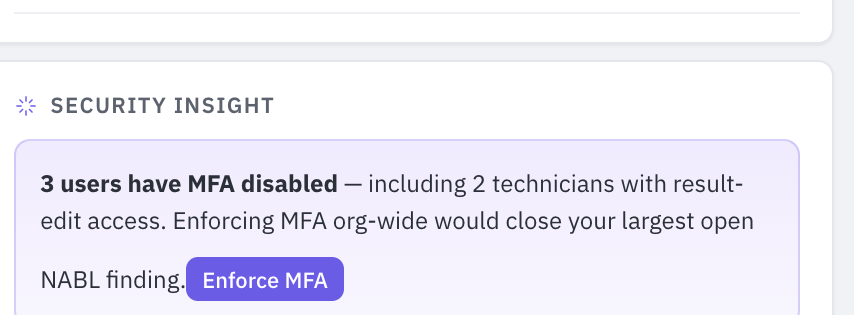
The audit trail, Levey-Jennings quality control charts, Westgard rule handling and corrective action logs are built for accreditation evidence, and validation documents are produced during instrument sign-off.
Bring us your requirement. We’ll bring the expertise to make it real.
A 30-minute call with an engineer, not a salesperson. Tell us the problem and we’ll tell you what’s possible.